
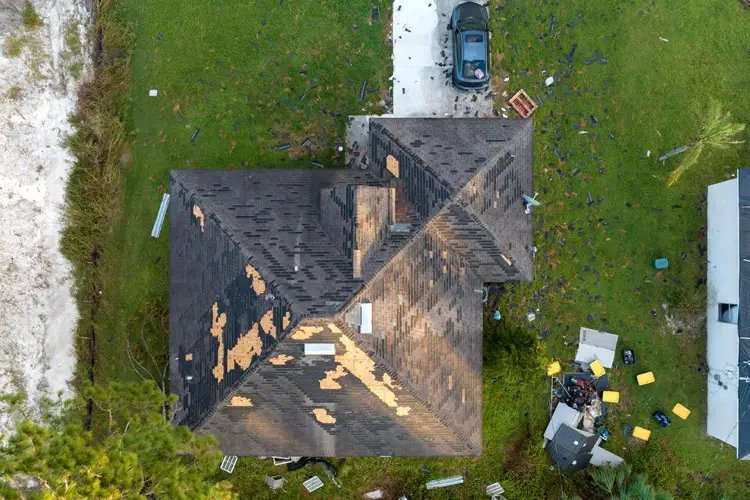
Here's the thing about a roof: it almost never just quits on you out of nowhere. Most of the time it's been telling you something's wrong for months, sometimes years. You just have to know what you're looking at.
I've been climbing roofs around Northern Indiana and Southern Michigan for over ten years now, and the folks who end up in real trouble, the water-through-the-ceiling, rotten-decking kind, are almost always the ones who saw the early signs they needed a new roof and figured it would be fine. I get it. Nobody wants to think about their roof until they have to.
So let me walk you through the seven warning signs I tell people to keep an eye on, what each one actually means, and how I decide on the spot whether you're looking at a quick repair or a whole new roof. And I'll be straight with you: some of these are a repair, not a roof. I'll tell you which is which.
How long should a roof last?
Quick Answer: Most roofs in our climate last 20 to 30 years depending on the system. If yours is past 20, the warning signs below matter more, and they tend to show up faster.
Age is the first thing I look at, because it sets the context for everything else. Around here, most roof systems give you somewhere between 20 and 30 years, and that lines up with the wider industry: This Old House's roofing guide puts asphalt shingle roofs in that same 20-to-30-year range. When I see one failing early, say at 12 to 15 years, it almost always comes down to one of two things: a ventilation problem cooking the shingles from underneath, or a cheaper shingle that was never going to go the distance.
So before you panic about any single sign, ask how old the roof is. A few worn spots on a 6-year-old roof tell a very different story than the same spots on a 25-year-old roof.
Why are your shingles curling or buckling?
Quick Answer: When shingles start to curl at the edges or lift in the middle, the asphalt has dried out and lost its flexibility. It's one of the clearest signs your roof is wearing out.
This one's about as obvious as it gets, and that's good news, because you can usually spot it standing in your own yard. A healthy shingle lies flat. When they start curling up at the corners, cupping, or buckling in the middle, the asphalt has dried out and aged past the point of doing its job. A shingle that's lost its shape can't shed water right, and once that happens the wind starts working its way underneath.
Why are there granules in your gutters?
Quick Answer: Granules are the sandy coating that protects your shingles from the sun. When they wash off, you'll find them in your gutters and your roof can take on a shiny look where the fiberglass underneath shows through.
Here's a tell most people don't know. If you look up at your roof and parts of it look shiny, that shine is the fiberglass showing through where the granules have worn away. A heavy amount of granule loss is a real warning sign that the roof is getting near the end.
The catch is that this is the most overlooked sign of all, because granules collect in the gutter where you never look. You have to go check for them.

“Next time you've got the ladder out to clean the gutters, run your hand along the bottom of the trough. If it comes back covered in what looks like coarse black sand, that's your shingles aging in front of you. A little is normal. A lot, especially on a roof past 15 years, means it's time to get a professional set of eyes on it.”
What do water stains on your ceiling mean?
Quick Answer: Brown stains on the underside of your roof deck, or watermarks on an interior ceiling, almost always mean water is already getting in. This is the sign that worries homeowners the most, and for good reason.
Grab a flashlight and look at the underside of your roof deck from inside the attic. If you see dark staining on the wood, water has been finding its way in. Inside the house, a watermark spreading across a ceiling is the same story from below.
In my experience this is the one that scares people the most, and I understand why. A stain means the water is already past your shingles and into the structure. If you can actually see daylight coming through the roof boards, that's rarer and more serious still. Don't sit on this one.
"Better Way and Lyle were amazing. The day after I called him about a leaky roof, he sent people to the house to tarp it so there wouldn't be any further damage. The work was completed in a day."
Donna G., Better Way Roofing customer
Why is your roof sagging?
Quick Answer: A roofline that dips or sags can mean the wood decking underneath has deteriorated from a leak, or that the decking was too thin for the rafter spacing to begin with.
When a roof looks like it has dips or waves in it instead of running straight, the decking underneath is the suspect. Sometimes that's deteriorated sheeting from a leak. Other times it's simply structural: if the rafters are set 24 inches apart and the builder used thin 3/8-inch sheeting, that roof can start to sag over time on its own, without anything being rotten. If you want to go deeper on this, here's when roof sheeting actually needs replacing.
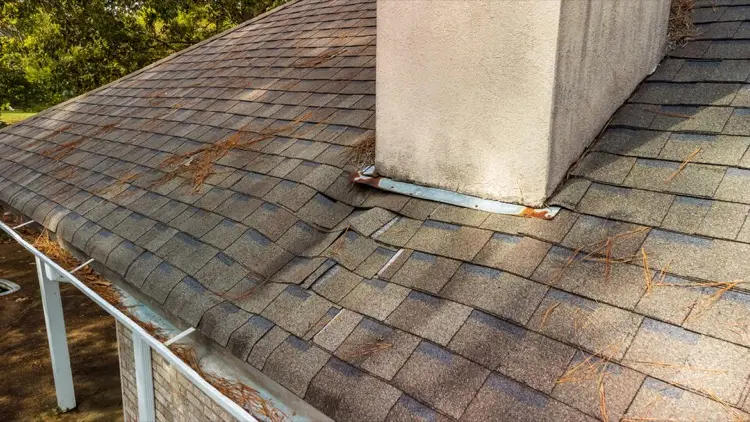
How fast you need to act depends on whether there's an active leak behind it. If the sheeting is sagging and water is getting in, you've got maybe a month to two years before it becomes a real problem, depending on how big the leak is. That's not a sign to watch and wait on.
Are your shingles missing or creased after a storm?
Quick Answer: Wind lifts and tears shingles, and around here that's the most common problem we see, especially in storm season. A creased shingle is a red flag, because it means the seal has already broken.
Of all seven signs, this is the one I see most in Northern Indiana and Michigan, particularly this time of year when the storms roll through. A few missing shingles after a big blow is common. The one to really watch for is a creased shingle. If a storm has just come through, here's how to spot roof storm damage and what to do next.
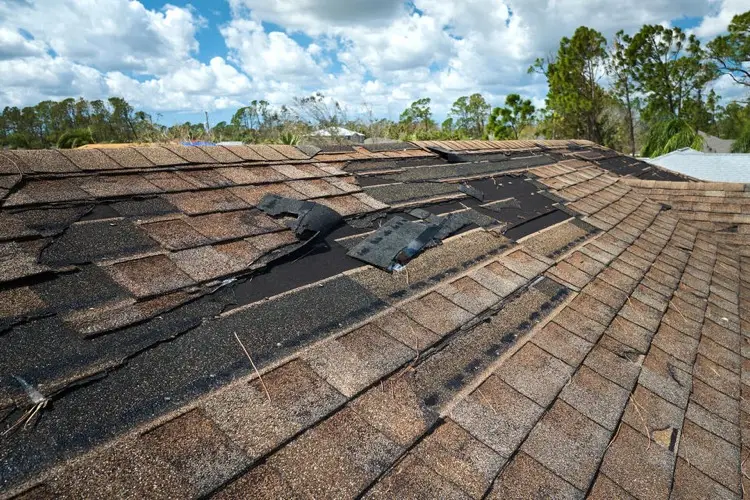
“After a windy stretch, look for shingles that are missing or creased. A crease means the seal broke and the wind actually flipped that shingle up at some point. Even if it's lying back down now, the bond is gone and it will leak eventually. Get those repaired before the next storm finds them.”
Is your roof leaking around a pipe, chimney, or vent?
Quick Answer: Flashing seals the spots where your roof meets a chimney, wall, valley, or vent pipe. The rubber boots around plumbing pipes are usually the first thing to crack and leak, often before the shingles are even worn out.
I'll be straight with you: most flashing problems are an expert-level thing to spot. Flashing is the metal or sealing material that closes up the joints where your roof meets a chimney, a wall, a valley, or a vent pipe. You'd need to know what you're looking at to catch a failing chimney or valley flashing, and that's what a proper inspection is for. If you want the full breakdown, here's our guide to how roof flashing works and why it fails.
But there's one piece you can check yourself, and it matters, because it's often the very first thing to go bad on a roof: the pipe boot. That's the rubber collar that wraps around the plumbing vent pipes sticking up out of your roof, the ones that vent your drains, sealing the gap where each pipe passes through the shingles. Those rubber boots dry out, crack, and start leaking, sometimes while the shingles around them still have plenty of life left.
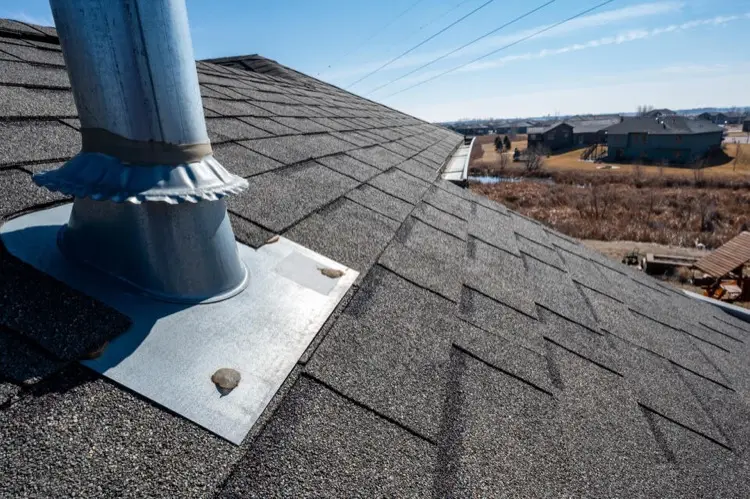
“Look at the rubber boots where pipes stick up through the roof. If you can see a crack in the rubber, it's deteriorating and it's only a matter of time before it leaks. Resealing it buys you a couple more years from a maintenance standpoint, but understand that's a stopgap, not the long-term fix.”
Is moss on your roof a problem?
Quick Answer: Sometimes. Moss and persistent damp trap moisture against the roof and speed up rot. On its own it isn't always an emergency, but it's often the outside view of a moisture problem you'd also catch inside.
Let me be honest with you about this one, because it's closely tied to those ceiling and attic stains we talked about earlier. Moss and constant damp on the outside of the roof, and the attic-deck staining you'd see from inside, are usually two views of the same thing: water and moisture sitting where they shouldn't. The reason I still list moss on its own is that you spot it differently, standing in the yard looking up at the roof, rather than up in the attic with a flashlight. So if you've got green moss spreading outside and dark stains on the boards inside, don't treat them as two separate problems. It's one moisture problem, and it's worth getting looked at.
Do you need a roof repair or a full replacement?
Quick Answer: My rule of thumb: if the repair is going to cost 30% or more of a new roof, you're usually better off replacing. Age matters too. If you'll need a new roof within a few years anyway, I'll tell you that straight.
When a homeowner shows me one of these signs, here's how I decide. If the repair is going to run 30% or more of what a new roof costs, I'll usually recommend replacement, because you're throwing good money at a roof that's near the end. Age plays into it as well. If the roof is going to need replacing in the next three or four years no matter what, I'll tell you that and give you a price so you can plan for it. We break the math down further in our guide to roof repair vs. replacement.
But it isn't always all or nothing. Sometimes the repair isn't that significant and a full roof doesn't fit the budget right now. In that case we'll do the repair to keep you dry, and give you a price on a full roof so you can budget for it on your own timeline. That's the honest way to handle it.
Do you really need a new roof? Watch for this red flag
Quick Answer: If a contractor tells you that you need a full roof replacement but won't show you a single photo or explain why, be careful. That's the oldest high-pressure tactic in this business.
Let me tell you about a homeowner down in Waterloo, Indiana. He had about four missing shingles. We did a thorough inspection, took pictures, and showed him exactly what we found. The granules weren't bad, the shingles still had real life left in them, and honestly it just needed some maintenance and the missing shingles filled in. We quoted it at our minimum, $1,250.
Another company had already been out to see him. They told him he needed a brand-new roof. No pictures. No reasoning. Just a verbal "you need a new roof because" and a high-pressure pitch. Their price? $27,000. Even if that roof had genuinely needed full replacement, we'd have been around $14,000 to do it. They weren't solving his problem. They had a sales quota to hit and a full roof to sell. It's exactly the kind of high-pressure contractor problem that costs homeowners thousands.
I've had this happen more than once. Another homeowner had a leak right where the garage and house came together. They asked me how much life the shingles had left, and I told them straight: probably four to six years if they're lucky. I gave them a repair price and a price for a full roof, no pressure either way. They looked at the honest numbers and decided to just do it now.
Here's what I've learned. When you show a homeowner the attention and the truth on a small repair, they trust your recommendation on the big stuff. That's the whole difference between us and the company that just wants the sale.
"Great service with old-time kindness. Had a missing shingle and they came out to check my roof. Told me it had three to five years left on it and fixed my shingle."
Joe B., Better Way Roofing customer
Get a free roof inspection
If you've spotted one or two of these on your own roof, don't panic, but don't just sit on it either. Get somebody up there who'll show you the photos and give you a straight answer, repair or replacement. Nine times out of ten it's a smaller fix than you're afraid of.
Get a free roof inspection within 48 hours. We'll get up there, document exactly what's going on with pictures, and give you a straight recommendation, even if that recommendation is "you don't need a new roof yet." Call us at (574) 370-8342 or request your free inspection online.
Frequently asked questions
How do I know if I need a new roof or just a repair?
It comes down to cost and age. If a repair would run 30% or more of a full replacement, or the roof is within a few years of the end anyway, replacement usually makes more sense. A proper inspection with photos is the only way to know for sure. Plenty of "you need a new roof" diagnoses are actually repairs.
How long should a roof last in Northern Indiana?
Most roof systems in our climate last 20 to 30 years. When one fails earlier, around 12 to 15 years, it's usually down to poor attic ventilation or a cheaper grade of shingle that didn't hold up to our winters and storms.
Are granules in my gutter a serious problem?
A small amount of granule loss is normal as a roof ages. A heavy amount, especially on a roof over 15 years old or one that's starting to look shiny from the ground, means the shingles are wearing out and it's worth getting inspected.
What does a creased shingle mean?
A crease means the wind lifted that shingle and broke its seal at some point. Even if it has settled back down, the bond that keeps water out is gone, so it will leak eventually. Creased shingles should be repaired before the next storm.
Should I worry if a contractor won't show me photos?
Yes. Any honest roofer can show you pictures of exactly what they found and explain why they're recommending repair or replacement. If someone insists you need a full new roof but won't document it, that's a high-pressure sales tactic, and it's worth getting a second opinion.